BibliOpen logo
Search icon
Cover unavailable
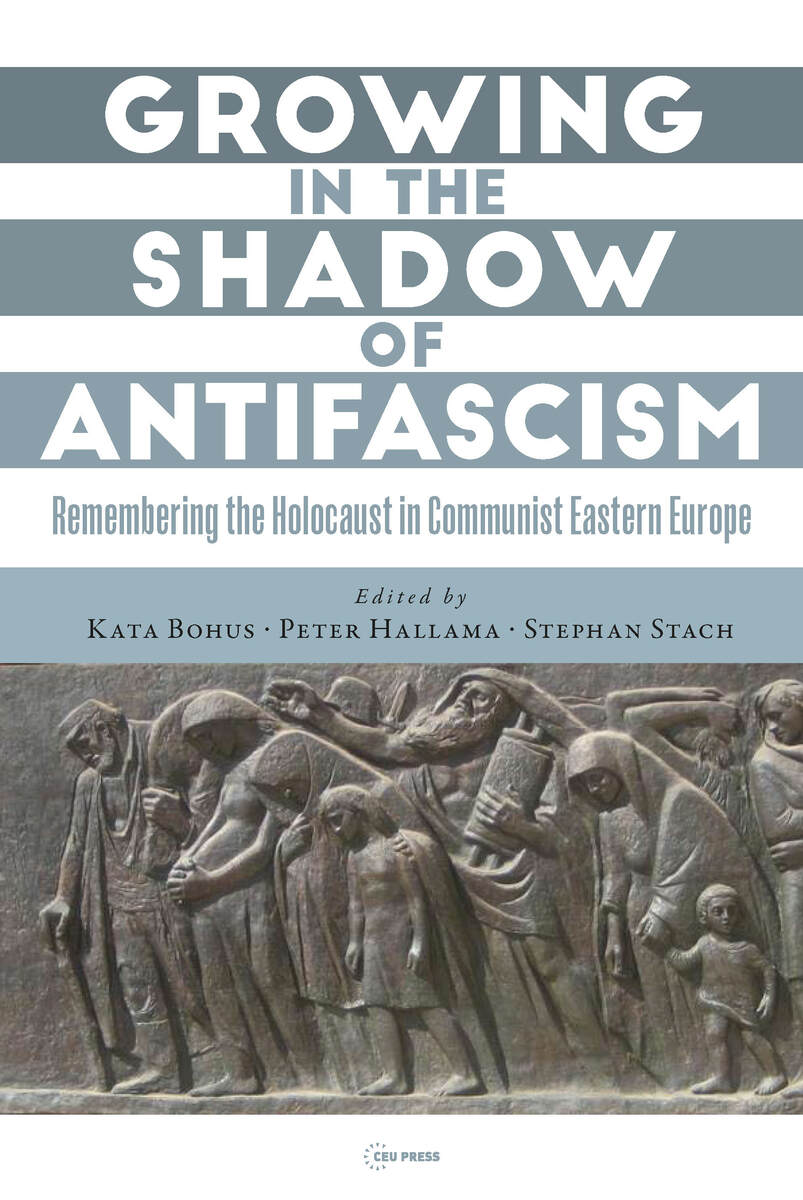
Growing in the Shadow of Antifascism: Remembering the Holocaust in State-Socialist Eastern Europe

edited by Kata Bohus, Peter Hallama and Stephan Stach

Central European University Press, 2022

ISBNs

Cloth: 978-963-386-435-7

eISBN: 978-963-386-682-5 (ePub)

eISBN: 978-963-386-436-4 (PDF)

About the Book

Reined into the service of the Cold War confrontation, antifascist ideology overshadowed the narrative about the Holocaust in the communist states of Eastern Europe. This led to the Western notion that in the Soviet Bloc there was a systematic suppression of the memory of the mass murder of European Jews. Going beyond disputing the mistaken opposition between “communist falsification” of history and the “repressed authentic” interpretation of the Jewish catastrophe, this work presents and analyzes the ways as the Holocaust was conceptualized in the Soviet-ruled parts of Europe.

The authors provide various interpretations of the relationship between antifascism and Holocaust memory in the communist countries, arguing that the predominance of an antifascist agenda and the acknowledgment of the Jewish catastrophe were far from mutually exclusive. The interactions included acts of negotiation, cross-referencing, and borrowing. Detailed case studies describe how both individuals and institutions were able to use anti-fascism as a framework to test and widen the boundaries for discussion of the Nazi genocide. The studies build on the new historiography of communism, focusing on everyday life and individual agency, revealing the formation of a great variety of concrete, local memory practices.

About the Author

Dr. Kata Bohus is senior research advisor at the University of Tromsø

Dr. Peter Hallama is research fellow at the University of Bern, Switzerland.

Stephan Stach is a historian at Leibniz Institute for the History and Culture of Eastern Europe, Leipzig.

Reviews
"The chapters contribute to differentiate our understanding of the rooms for intellectual and mnemonic manoeuvre within the ideological framing of the official Soviet and state socialist memory of the war. The various perspectives presented in the chapters are tied together convincingly by the editors’ introduction. They offer a coherent and insightful framing that makes the volume an important contribution to the understanding of Holocaust memory in Eastern European societies during state socialism."http://www.hsozkult.de/publicationreview/id/reb-131854
-- Monika Heinemann H-Soz-Kult

"Erscheint die Zuspitzung auf die Frage nach den Spielräumen des Antifaschismus für das Verständnis der Nachgeschichte des Holocaust in Osteuropa sinnvoll. Das hier vorliegende Format eines internationalen Tagungsbandes mit einer Fülle von Fallstudien zu unterschiedlichen Ländern und Formen des Umgangs mit der Judenverfolgung ist besonders hilfreich, um das Verständnis für Vernetzungen, Gemeinsamkeiten und nationale Unterschiede zu schärfen. Der vorliegende Band lädt zu weiteren kritischen Auseinandersetzungen mit der Thematik ein, auch mit Blick auf andere Disziplinen wie etwa die Filmwissenschaft."
-- Sara Berger Zeitschrift für Ostmitteleuropa-Forschung

"Erscheint die Zuspitzung auf die Frage nach den Spielräumen des Antifaschismus für das Verständnis der Nachgeschichte des Holocaust in Osteuropa sinnvoll. Das hier vorliegende Format eines internationalen Tagungsbandes mit einer Fülle von Fallstudien zu unterschiedlichen Ländern und Formen des Umgangs mit der Judenverfolgung ist besonders hilfreich, um das Verständnis für Vernetzungen, Gemeinsamkeiten und nationale Unterschiede zu schärfen." http://www.sehepunkte.de/2024/09/39562.html
-- Sara Berger Sehepunkte

Tags
Fascism, Persecutions, Growing, Holocaust Jewish (1939-1945), Holocaust, Jewish Studies, Jews, Ethnic relations, Historiography, Modern, 20th century, Social Science, History
Open Access Information

Label: Knowledge Unlatched

License: OA CC BY-NC-ND