BibliOpen logo
Search icon
Cover unavailable
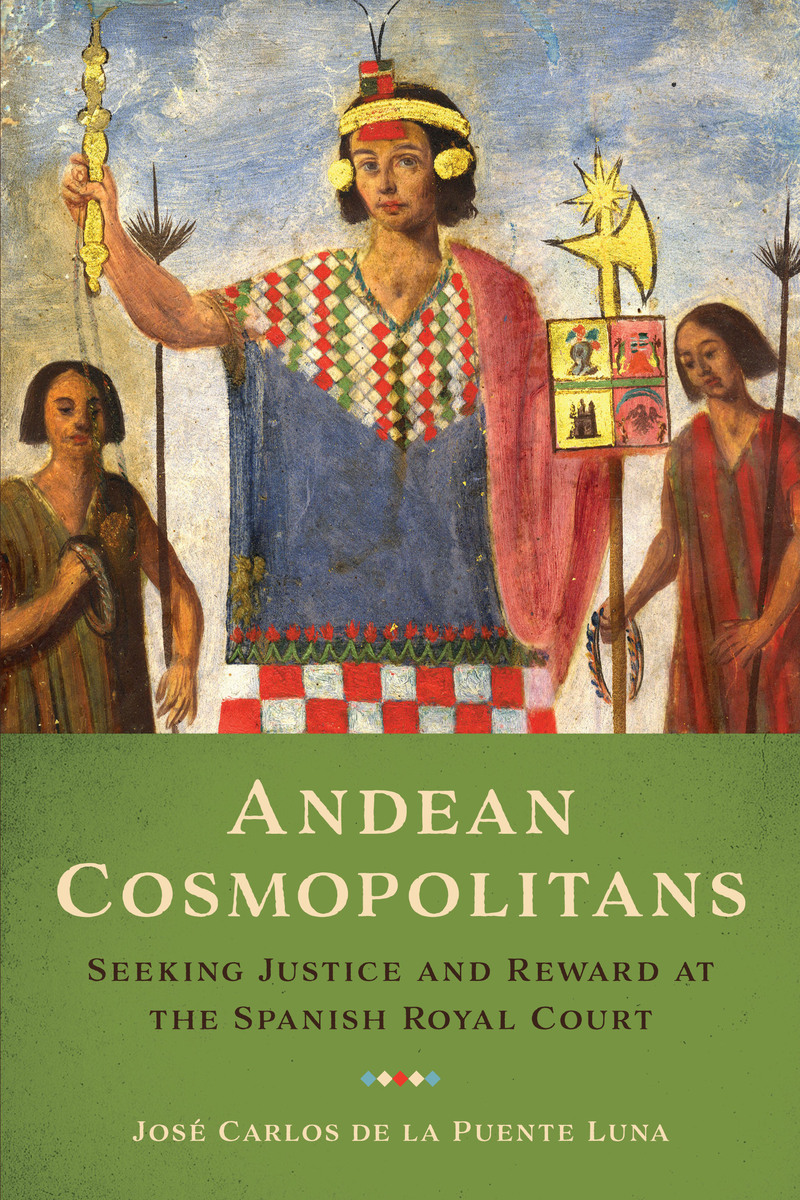
Andean Cosmopolitans: Seeking Justice and Reward at the Spanish Royal Court

by José Carlos de la Puente Luna

University of Texas Press, 2018

ISBNs

Cloth: 978-1-4773-1443-2

Paper: 978-1-4773-1486-9

eISBN: 978-1-4773-1488-3 (ePub)

eISBN: 978-1-4773-1487-6 (PDF)

About the Book

Winner, Premio Flora Tristán Al Mejor Libro, Peru Section, Latin American Studies Association, 2019

After the Spanish victories over the Inca claimed Tawantinsuyu for Charles V in the 1530s, native Andeans undertook a series of perilous trips from Peru to the royal court in Spain. Ranging from an indigenous commoner entrusted with delivering birds of prey for courtly entertainment to an Inca prince who spent his days amid titles, pensions, and other royal favors, these sojourners were both exceptional and paradigmatic. Together, they shared a conviction that the sovereign’s absolute authority would guarantee that justice would be done and service would receive its due reward. As they negotiated their claims with imperial officials, Amerindian peoples helped forge the connections that sustained the expanding Habsburg realm’s imaginary and gave the modern global age its defining character.

Andean Cosmopolitans recovers these travelers’ dramatic experiences, while simultaneously highlighting their profound influences on the making and remaking of the colonial world. While Spain’s American possessions became Spanish in many ways, the Andean travelers (in their cosmopolitan lives and journeys) also helped to shape Spain in the image and likeness of Peru. De la Puente brings remarkable insights to a narrative showing how previously unknown peoples and ideas created new power structures and institutions, as well as novel ways of being urban, Indian, elite, and subject. As indigenous people articulated and defended their own views regarding the legal and political character of the “Republic of the Indians,” they became state-builders of a special kind, cocreating the colonial order.

About the Author

José Carlos de la Puente Luna is an associate professor of history at Texas State University. He is the author of Los curacas hechiceros de Jauja: Batallas mágicas y legales en el Perú colonial and coeditor of El quipu colonial: estudios y materiales.

Reviews
José Carlos de la Puente Luna achieves a triumph of research, analysis, and prose…Experts will marvel at its simultaneously local and global scope and its profound new perspectives on the viceregal period.
— Hispanic American Historical Review

The remarkable strengths of de la Puente Luna's book: constant attention to the indigenous as that which is constructed in discourse and through discourse, and thus is indicative of subjection, limited by the law, yet transformative of it, in the charged contexts of local and imperial representation.
— Renaissance Quarterly

De La Puente has shown himself a virtuoso researcher in many archives, and at the same time a powerful renovator of New World history in the wide frame. He changes our view of the seventeenth century by clarifying how the institutions called Andean community took shape—and also by proving that community is not the whole Andean story. Everyone concerned with creating a truly ‘forward-facing’ history of the New World peoples will want to read Andean Cosmopolitans.
— Ethnohistory

[An] important monograph...Anyone wanting to understand the centrality of the legal system for shifting social and power constellations in the colonial Andes needs to read this impressive work of scholarship.
— Journal of Latin American Studies

Andean Cosmopolitans is a nuanced and comprehensive study...What makes the book so exciting is its unusual historiographical combination. De la Puente Luna brings together two historiographies, each with their own traditions, methods, and paradigms: ethnohistory and Atlantic history...This beautifully documented study is also a deep exploration of the meaning of indigeneity in the Spanish Empire. The indigenous world reconstructed here is unpredictable, in flux, and fascinating.
— H-Net Reviews, Latin America

This much anticipated book is a thorough analysis of the Amerindian travelers and their respective networks...La Puente recovers these indigenous travelers’ social experiences and then inserts them into the making of the Spanish Atlantic.
— Colonial Latin American Review

De La Puente offers a fascinating study of the emergence of a new indigenous self-made elite of deracinated provincials. Through savvy uses of literacy and control of indigenous urban courts and legal resources, these urban, upwardly mobile, artisanal and mercantile former ‘commoners’ came to completely displace the Inca elites. This study breaks new ground
— Jorge Cañizares-Esguerra, Alice Drysdale Sheffield Professor of History, University of Texas at Austin

In this creative and provocative study, we learn that mid-colonial Andean elites approached the Spanish crown not only to demand personal rewards (as we have long known) but also to promote a vision of a Nación Indica, a collective identity that emerged from the juridical construct of the República de Indios. This is certainly a fresh and novel reading of the colonial period, one that will stand out among other intellectual, legal, and social histories.
— Karen B. Graubart, University of Notre Dame, author of With Our Labor and Sweat: Women and the Formation of Colonial Society in Peru, 1550–1700

The most comprehensive examination to date of the indigenous intermediary sector of colonial Peruvian society, which used Spanish and knowledge of the Spanish legal system to advocate for personal and collective interests. One would be hard-pressed to read another book as richly documented by published scholarship and archival findings.
— John Charles, Tulane University, author of Allies at Odds: The Andean Church and Its Indigenous Agents, 1583–1671

The research presented here…is immensely solid and coherent, reflecting the most recent works within the area of global history aimed at uncovering the mutual innterrelations and influences among different areas of the globe…a vibrant and dynamic narration...Andean Cosmopolitans presents all the necessary ingredients for becoming an indispensable reference work for a vision of colonial America based on the criteria of global history.
— Sixteenth Century Journal
Tags
Seeking Justice, Peru (Viceroyalty), Spanish Royal Court, Peru, Government relations, 16th century, Ethnic identity, 17th century, South America, Latin America, History
Open Access Information

Label: Open access edition funded by the National Endowment for the Humanities.

License: CC BY-NC-ND