
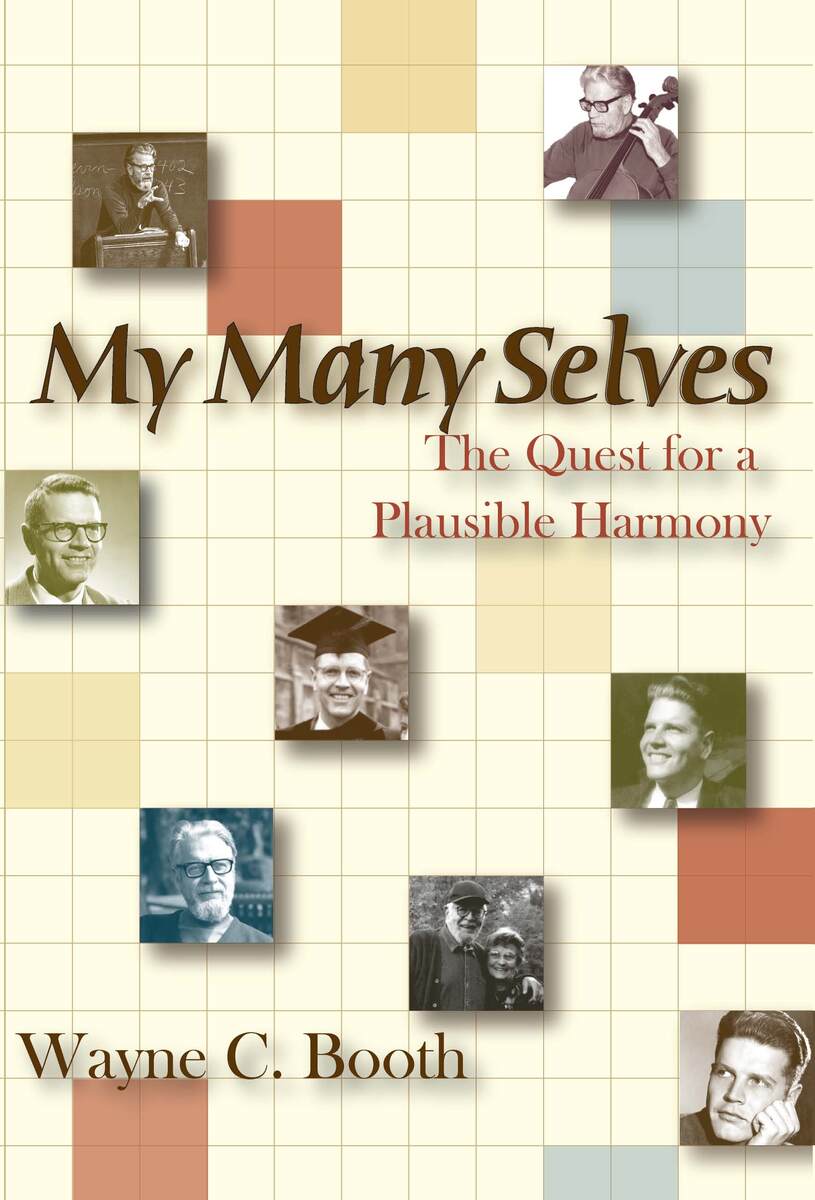
by Wayne C. Booth
Utah State University Press, 2006
Cloth: 978-0-87421-633-2
Paper: 978-0-87421-631-8
eISBN: 978-0-87421-535-9 (all)
His memoir, My Many Selves, is both an incisive self-examination and a creative approach to retelling his life. Writing his autobiography became a quest to harmonize the diverse, discordant parts of his identity and resolve the conflicts in what he thought and believed. To see himself clearly and whole, he broke his self down, personified the fragments, uncovered their roots in his life, and engaged his multiple identities and experiences in dialogue. Basic to his story and to its lifelong concerns with ethics and rhetoric was his youth in rural Utah. He valued that background, while acknowledging its ambiguous influence on him, and continued to identify himself as Mormon, though he renounced most Latter-day Saint doctrines.
Wayne Booth died in October 2005, soon after completing work on his autobiography.
Here the life and the form of its telling are integral—the book enacts the very divisions Wayne Booth is talking about, and what he is talking about has shaped the work he has done that has resonated with so many over the years. The honesty here is valuable in itself as people, Mormon or not, recognize their own conflicts that constitute the process of trying to live a better life, an effort we all tend to bungle. So as an autobiography, this is important. As a study in ethics and rhetoric it is important. As an experience of reading it is important—it comes together for the reader at the end in ways that tell the story of any honest life.
Gregory Clark, editor, Rhetoric Society Quarterly
Label: This book is freely available in digital formats through the Utah State University Library Digital Commons.
License: CC BY-NC-ND 4.0

 Loading...