BibliOpen logo
Search icon
Cover unavailable
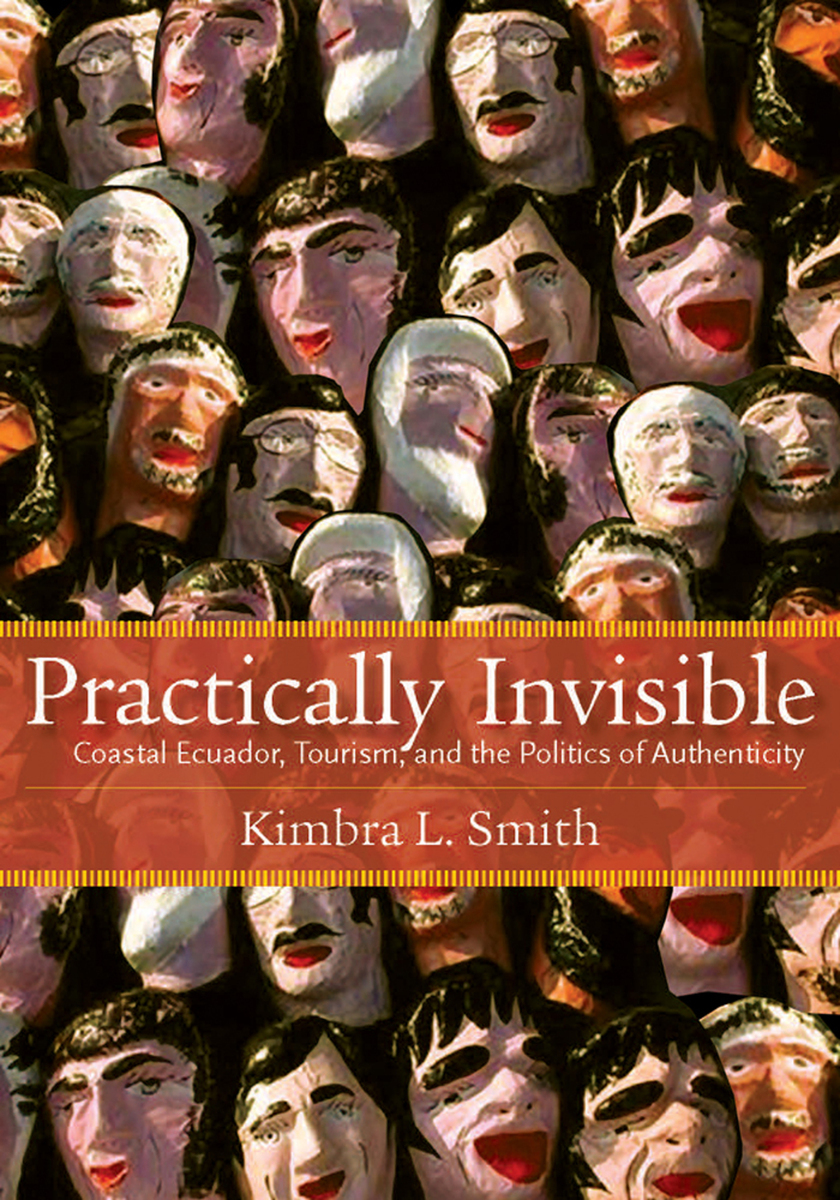
Practically Invisible: Coastal Ecuador, Tourism, and the Politics of Authenticity

by Kimbra Smith

Vanderbilt University Press, 2015

ISBNs

Cloth: 978-0-8265-2056-2

eISBN: 978-0-8265-0370-1 (ePub)

eISBN: 978-0-8265-2058-6 (PDF)

About the Book
The community of Agua Blanca, deep within the Machalilla National Park on the coast of Ecuador, found itself facing the twenty-first century with a choice: embrace a booming tourist industry eager to experience a preconceived notion of indigeneity, or risk losing a battle against the encroaching forces of capitalism and development. The facts spoke for themselves, however, as tourism dollars became the most significant source of income in the community.


Thus came a nearly inevitable shock, as the daily rhythms of life--rising before dawn to prepare for a long day of maintaining livestock and crops; returning for a late lunch and siesta; joining in a game of soccer followed by dinner in the evening--transformed forever in favor of a new tourist industry and the compromises required to support it. As Practically Invisible demonstrates, for Agua Blancans, becoming a supposedly "authentic" version of their own indigenous selves required performing their culture for outsiders, thus becoming these performances within the minds of these visitors. At the heart of this story, then, is a delicate balancing act between tradition and survival, a performance experienced by countless indigenous groups.

About the Author
Kimbra L. Smith is Associate Professor of Anthropology at the University of Colorado at Colorado Springs.
Reviews
"Smith reveals the power of dominant racial geographies in Ecuador, which imagine the country's Pacific coast to be devoid of indigenous peoples, and thoughtfully explores how Agua Blancans' cultural performances and daily practices contest this invisibility. Smith weaves together descriptions of local performances of indigeneity for outside audiences, stories that circulate within the community, and day-to-day practices to demonstrate how Agua Blancans have been transformed by and in turn have transformed dominant languages of indigeneity and invisibility within their specific local context."
--Maximilian Viatori, author of One State, Many Nations: Indigenous Rights Struggles in Ecuador— -

"Smith reveals the power of dominant racial geographies in Ecuador, which imagine the country's Pacific coast to be devoid of indigenous peoples, and thoughtfully explores how Agua Blancans' cultural performances and daily practices contest this invisibility. Smith weaves together descriptions of local performances of indigeneity for outside audiences, stories that circulate within the community, and day-to-day practices to demonstrate how Agua Blancans have been transformed by and in turn have transformed dominant languages of indigeneity and invisibility within their specific local context."
--Maximilian Viatori, author of One State, Many Nations: Indigenous Rights Struggles in Ecuador— -

Tags
Authenticity, Culture and tourism, Human Geography, Ethnic identity, Politics, Social life and customs, Social Science
Open Access Information

Label: Knowledge Unlatched

License: CC BY-NC-ND 4.0