
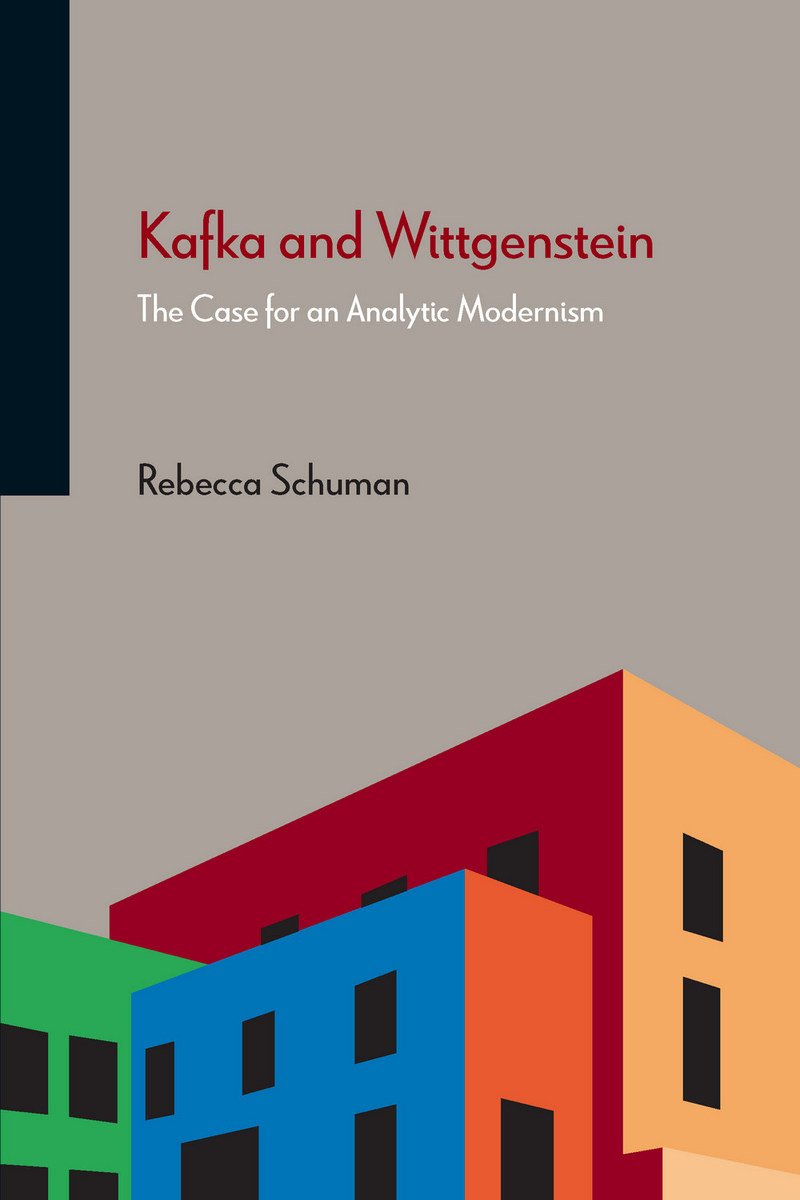
by Rebecca Schuman
Northwestern University Press, 2015
Cloth: 978-0-8101-3146-0
Paper: 978-0-8101-3184-2
eISBN: 978-0-8101-3150-7
In Kafka and Wittgenstein, Rebecca Schuman undertakes the first ever book-length scholarly examination of Ludwig Wittgenstein’s philosophy of language alongside Franz Kafka’s prose fiction. In groundbreaking readings, she argues that although many readers of Kafka are searching for what his texts mean, in this search we are sorely mistaken. Instead, the problems and illusions we portend to uncover, the im-portant questions we attempt to answer—Is Josef K. guilty? If so, of what? What does Gregor Samsa’s transformed body mean? Is Land-Surveyor K. a real land surveyor?— themselves presuppose a bigger delusion: that such questions can be asked in the first place. Drawing deeply on the entire range of Wittgenstein’s writings, Schuman can-nily sheds new light on the enigmatic Kafka.
"Schuman makes a convincing case for a new way of thinking about modernism that brings together arguably the most important philosopher of the first half of the twentieth century with the most important literary author of that same time period... Schuman offers a more dialogical approach that values both partners—literature and philosophy, Kafka and Wittgenstein—in the conversation and shows how each enables a new reading of the other. In doing so, she opens up the canon of analytic philosophy as a potent and considerably untapped resource and conversation partner for literary studies, which have tended toward continental philosophy whenever philosophy has been part of the literary conversation." --German Studies Review

 Loading...