
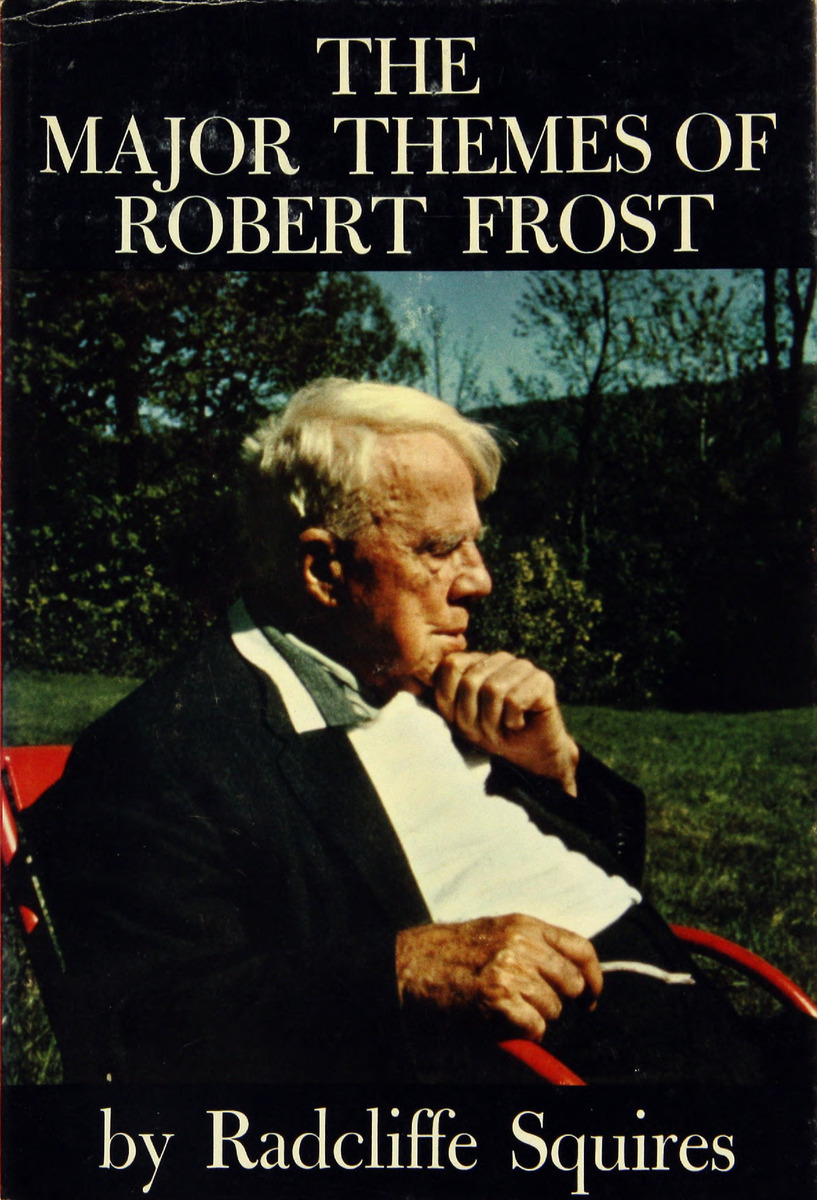
Major Themes of Robert Frost
This title is not available from this publisher at this time. To let the publisher know you are interested in the title, please email bv-help@uchicago.edu.
Major Themes of Robert Frost
by Radcliffe Squires
University of Michigan Press, 1963
ISBNs
Paper: 978-0-472-06149-5
eISBN: 978-0-472-91304-6 (OA)
About the Book
Poet, philosopher, and ambassador of culture Robert Frost has achieved a unique position in the history of American literature. His life has spanned the violent and war-torn years of the 20th century, yet his poetry is dominated by a belief in man’s sacred duty to endure. Like Emerson, Thoreau, and Dickinson, he has transcended regionalism to become a major American writer. Frost's passion for individuality has marked all great poets from Shakespeare and Keats to Dylan Thomas. He has refused to be seduced by passing literary fashions. In an age of literary dogmas, he stands alone, and his integrity is reflected again and again by his poetry. Today, recognition of Frost's work is worldwide. He is the first poet ever to have participated in the inauguration of an American president, and he toured Russia as a guest of the Soviet government. His volume of poems, In The Clearing, published during his eighty-eighth year, immediately became a best seller. But few people are aware that Frost was also once a playwright. In The Major Themes of Robert Frost, Radcliffe Squires examines the relatively unknown drama, A Way Out—a work deeply committed to a psychological view of good and evil. He also examines Frost’s important dramatic poem “West-Running Brook,” comparing its theme with philosophical ideas expressed by William James. In these as well as in other works Squires finds those qualities—the keen intelligence, the compassion, the honesty — which make Frost one of the most widely read poets in the world.
Tags
Ann Arbor Paperbacks, Robert Frost, Major Themes, Reference
Open Access Information
License: Public Domain

 Loading...