
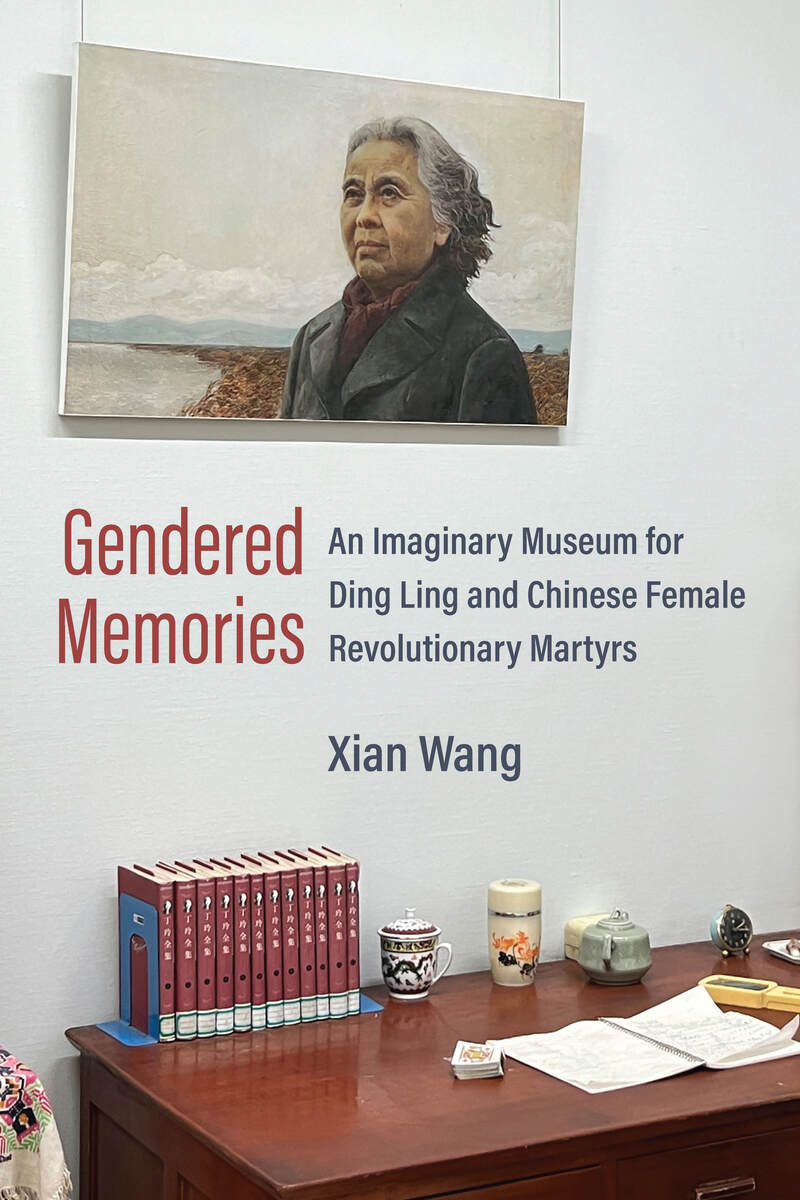
by Xian Wang
University of Michigan Press, 2025
Cloth: 978-0-472-07719-9
Paper: 978-0-472-05719-1
eISBN: 978-0-472-90481-5 (OA)
This impressive work will be welcomed for its fresh analysis of key female figures in China's revolutionary history and novel contribution to our understandings of memory, national commemoration, and gender.
— Louise Edwards, University of New South WalesCharming and fascinating. Gendered Memories will change how Anglophone Ding Ling studies will proceed from now on.
— Tani Barlow, Rice University“Wang's monograph reveals the gendered dimension of the construction of revolutionary memory…This book radically deconstructs the political metaphor of chastity and argues that when the state attempts to reinforce revolutionary legitimacy through ‘chastity martyrdom,’ it inadvertently constructs a cognitive framework that obscures women's revolutionary agency.”
— Jocelyn Xu, Women's History Review“Wang's Gendered Memories contributes signficantly to the field of Chinese studies, in particular Chinese literature and history. It also provides valuable insights for anyone interested in gender, memory or literature studies who hopes to gain a Chinese perspective that informs then about the power ”the CCP" had over cultural production and historiography while allowing that women like Ding Ling were also “the CCP.”
— Emily Graf, The China Quarterly“Gendered Memories is invaluable to those interested in collective memory, female sexuality, politics of representation, modern Chinese literature, and the Communist women's movement.”
— Lin Li, Journal of Asian Studies“By highlighting the gaps in official history and piecing together fragments of private memories, Gendered Memories reconstructs for us a rich and multivalent picture of modern Chinese history.”
— Hu Ying, Nan Nü: Men, Women, and Gender in China"Xian Wang has written a book that will impress readers interested in how images of women revolutionaries have been shaped and reshaped in revolutionary cultures. Her research is based on serious engagement with a panoply of sources, including, among others, fictional tales, drama, opinion pieces, memoirs, sculptures, and paintings."
— Hung-Yok Ip, Journal of Chinese HistoryLabel: The Lieberthal-Rogel Center for Chinese Studies (LRCCS)
License: CC BY-NC

 Loading...