
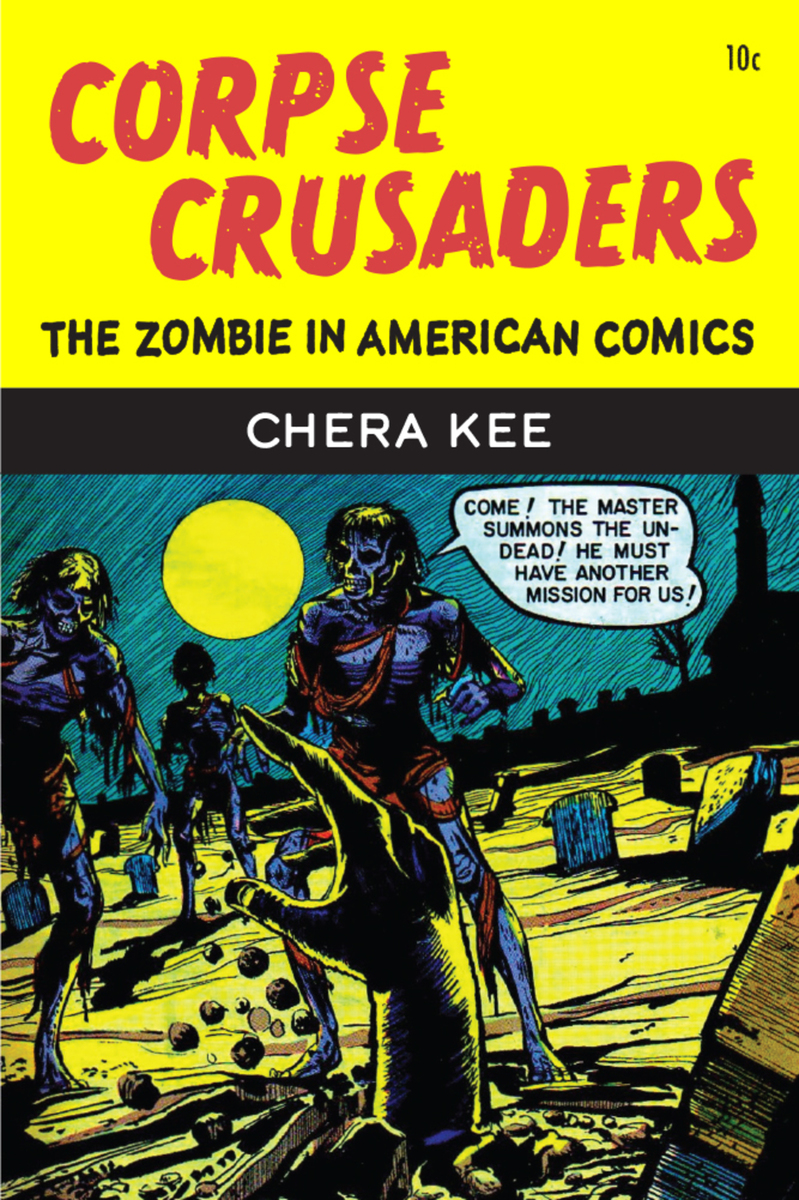
Corpse Crusaders: The Zombie in American Comics
Corpse Crusaders: The Zombie in American Comics
by Chera Kee
University of Michigan Press, 2024
ISBNs
Cloth: 978-0-472-07685-7
Paper: 978-0-472-05685-9
eISBN: 978-0-472-90450-1 (OA)
About the Book
In the popular imagination, zombies are scary, decomposing corpses hunting down the living. But since the 1930s, there have also been other zombies shambling across the panels of comic books—zombies that aren’t quite what most people think zombies should be. There have been zombie slaves, zombie henchmen, talking zombies, beautiful zombies, and even zombie heroes.
Using archival research into Golden Age comics and extended analyses of comics from the 1940s to today, Corpse Crusaders explores the profound influence early action/adventure and superheroic generic conventions had on shaping comic book zombies. It takes the reader from the 1940s superhero, the Purple Zombie, through 1950s revenge-from-the-grave zombies, to the 1970s anti-hero, Simon Garth (“The Zombie”) and the gruesome heroes-turned-zombies of Marvel Zombies. In becoming immersed in superheroic logics early on, the zombie in comics became a figure that, unlike the traditional narrative uses of other monsters, actually served to defend the status quo. This continuing trend not only provides insight into the overwhelming influence superheroes have had on the comic book medium, but it also provides a unique opportunity to explore the ways in which zombiism and superheroism parallel each other. Corpse Crusaders explores the ways that truth, justice, and the American way have influenced the undead in comics and turned what is often a rebellious figure into one that works to save the day.
Using archival research into Golden Age comics and extended analyses of comics from the 1940s to today, Corpse Crusaders explores the profound influence early action/adventure and superheroic generic conventions had on shaping comic book zombies. It takes the reader from the 1940s superhero, the Purple Zombie, through 1950s revenge-from-the-grave zombies, to the 1970s anti-hero, Simon Garth (“The Zombie”) and the gruesome heroes-turned-zombies of Marvel Zombies. In becoming immersed in superheroic logics early on, the zombie in comics became a figure that, unlike the traditional narrative uses of other monsters, actually served to defend the status quo. This continuing trend not only provides insight into the overwhelming influence superheroes have had on the comic book medium, but it also provides a unique opportunity to explore the ways in which zombiism and superheroism parallel each other. Corpse Crusaders explores the ways that truth, justice, and the American way have influenced the undead in comics and turned what is often a rebellious figure into one that works to save the day.
About the Author
Chera Kee is Associate Professor of Film & Media Studies in the English Department at Wayne State University.
Reviews
"The book tracks how the portrayal of zombies has changed in comics and evolved from the 1930s to the current day, beginning with a look at the Haitian roots of zombie stories, their use of enslaved zombies and zombie masters, and the inherent racism in how Black and white zombies were portrayed. Summing up: recommended. Graduate students through faculty."— CHOICE
“Kee’s artful, innovative analysis of the modern zombie’s journey as a racialized villain and gendered hero will delight zombiism scholars and comic enthusiasts alike. The dead will want to rise to read this book, only to die again from envy, knowing they couldn’t have written anything more compelling!”— Jamie A. Thomas, author of Zombies Speak Swahili: Race, Horror, and Sci-Fi from Mexico to Tanzania and Hollywood
“Chera Kee’s Corpse Crusaders presents a fascinating alternative history of the zombie through its evolution in comic books. By unearthing this rich and neglected history that draws upon examples from the 1940s through to the present and positions the zombie alongside superhero and crime comic traditions, Kee offers a fresh, insightful analysis that challenges how we think about the living dead.”— Stacey Abbott, author of Undead Apocalypse
“Corpse Crusaders is a thrilling and thoughtful study of comic book zombies that examines the boundaries between the horrific and the heroic. Kee unearths the intersections between zombies and superheroes while exploring issues of justice, genre and culture. A must-read for horror and comics fans alike.”
— Blair Davis, author of Christianity and Comics, Comic Book Women, Movie Comics, and The Battle for the Bs"Chera Kee demonstrates an encyclopedic knowledge of comics history and a sophisticated grasp of genre theory as she examines the zombie in American comics in the pulp era through to contemporary titles such as iZombie or Marvel Zombies, consistently showing us unexpected dimensions of the zombie as a figure that can be both heroic and tragic."— Henry Jenkins, Author of Comics and Stuff
Tags
Nonfiction, American Comics, Horror comic books strips etc, Zombies in comics, Media Studies, History and criticism, United States, Social Science
Open Access Information
License: CC BY-NC

 Loading...