
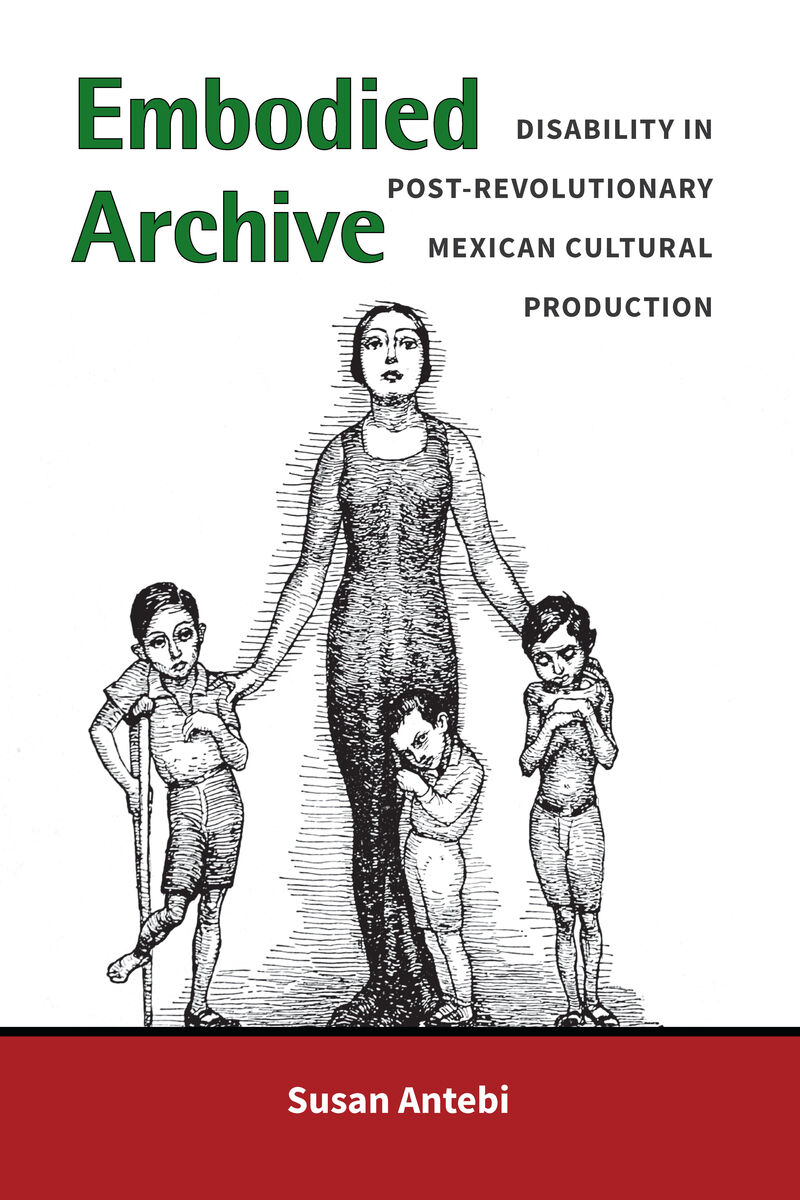
by Susan Antebi
University of Michigan Press, 2021
Paper: 978-0-472-03850-3
eISBN: 978-0-472-90242-2 (OA)
eISBN: 978-0-472-12884-6 (standard)
Embodied Archive focuses on perceptions of disability and racial difference in Mexico’s early post-revolutionary period, from the 1920s to the 1940s. In this period, Mexican state-sponsored institutions charged with the education and health of the population sought to strengthen and improve the future of the nation, and to forge a more racially homogeneous sense of collective identity and history. Influenced by regional and global movements in eugenics and hygiene, Mexican educators, writers, physicians, and statesmen argued for the widespread physical and cognitive testing and categorization of schoolchildren, so as to produce an accurate and complete picture of “the Mexican child,” and to carefully monitor and control forms of unwanted difference, including disability and racialized characteristics. Differences were not generally marked for eradication—as would be the case in eugenics movements in the US, Canada, and parts of Europe—but instead represented possible influences from a historically distant or immediate reproductive past, or served as warnings of potential danger haunting individual or collective futures.
Weaving between the historical context of Mexico’s post-revolutionary period and our present-day world, Embodied Archive approaches literary and archival documents that include anti-alcohol and hygiene campaigns; projects in school architecture and psychopedagogy; biotypological studies of urban schoolchildren and indigenous populations; and literary approaches to futuristic utopias or violent pasts. It focuses in particular on the way disability is represented indirectly through factors that may have caused it in the past or may cause it in the future, or through perceptions and measurements that cannot fully capture it. In engaging with these narratives, the book proposes an archival encounter, a witnessing of past injustices and their implications for the disability of our present and future.
Susan Antebi is Associate Professor of Latin American Literature at the University of Toronto.
Undoubtedly groundbreaking research. Embodied Archive will reverberate beyond Antebi's specific field of expertise, as issues of disability, race, and nation are presently of global relevance. Encarnación Juárez
— Encarnaciv=n Juv°rez-Almendros, University of Notre DameEmbodied Archive is the single most important book on Mexico and disability and should be required reading for cultural studies scholars in general.
— Robert McRuer, George Washington Universitythe work of contemporary disability studies theorists, and it pushes the field in new and exciting directions."— Beth E. Jorgensen, Bulletin of Hispanic Studies
Label: Victoria College at the University of Toronto
License: CC BY-NC-ND

 Loading...