
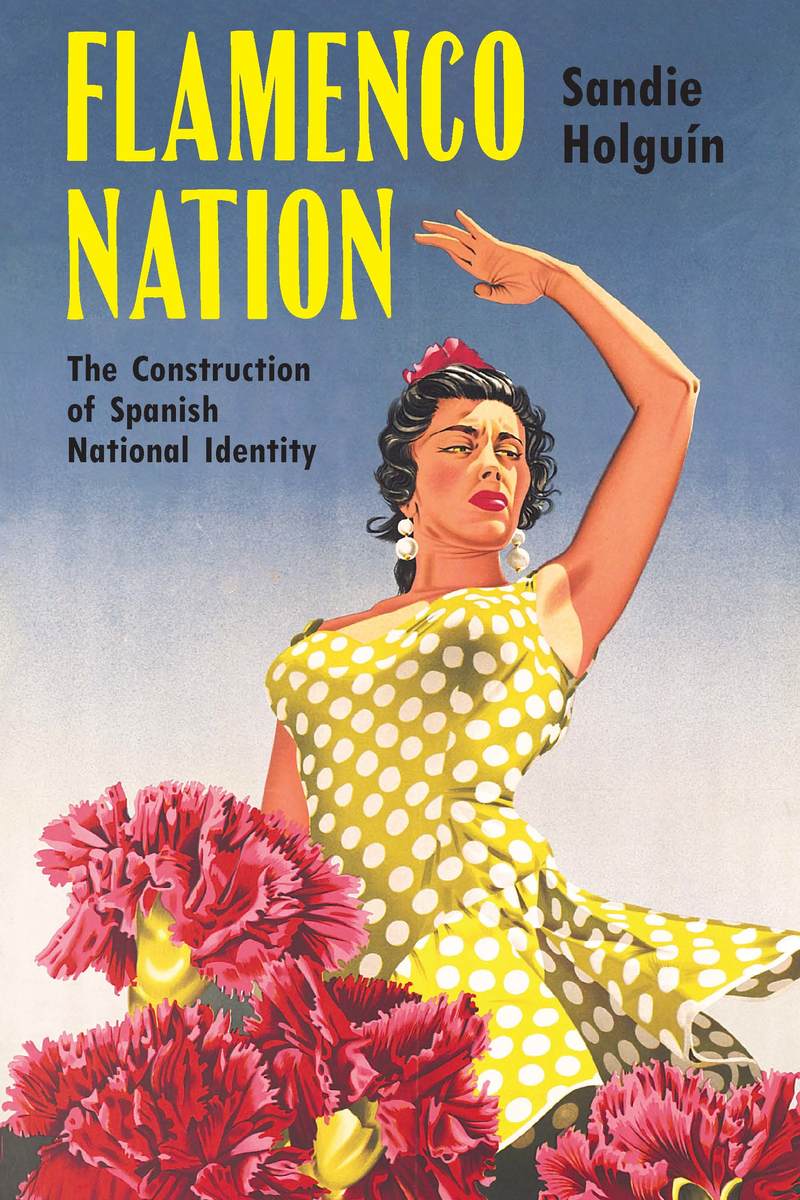
Flamenco Nation: The Construction of Spanish National Identity
Flamenco Nation: The Construction of Spanish National Identity
by Sandie Holguín
University of Wisconsin Press, 2019
ISBNs
Cloth: 978-0-299-32180-2
eISBN: 978-0-299-32183-3 (PDF)
About the Book
How did flamenco—a song and dance form associated with both a despised ethnic minority in Spain and a region frequently derided by Spaniards—become so inexorably tied to the country’s culture? Sandie Holguín focuses on the history of the form and how reactions to the performances transformed from disgust to reverance over the course of two centuries.
Holguín brings forth an important interplay between regional nationalists and image makers actively involved in building a tourist industry. Soon they realized flamenco performances could be turned into a folkloric attraction that could stimulate the economy. Tourists and Spaniards alike began to cultivate flamenco as a representation of the country's national identity. This study reveals not only how Spain designed and promoted its own symbol but also how this cultural form took on a life of its own.
Holguín brings forth an important interplay between regional nationalists and image makers actively involved in building a tourist industry. Soon they realized flamenco performances could be turned into a folkloric attraction that could stimulate the economy. Tourists and Spaniards alike began to cultivate flamenco as a representation of the country's national identity. This study reveals not only how Spain designed and promoted its own symbol but also how this cultural form took on a life of its own.
About the Author
Sandie Holguín is an associate professor of history at the University of Oklahoma, where she teaches European cultural and intellectual history and European feminist thought and gender studies. She specializes in Spanish history and is the author of Creating Spaniards: Culture and National Identity in Republican Spain.
Reviews
“Holguín’s well-written, witty, and scholarly book on flamenco and the shaping of modern Spanish national identity helps us understand the enigmatic tension between Spaniards’ often ambivalent attitudes toward flamenco and the art form’s enormous success beyond Iberia.”—Enrique Sanabria, University of New Mexico
“As bracing as the clicking of castanets, this book plunges the reader into the history of flamenco and charts how this art form became quintessentially Spanish. Holguín demonstrates how music and dance take on nationalist overtones—and does so with such verve.”—Clinton Young, author of Music Theater and Popular Nationalism in Spain, 1880–1930
"Breaks new ground. . . . Holguín’s prose is eminently readable, and her comprehensive research, verified with extensive quotes from contemporary sources, explores the varied influences on flamenco and the equally varied attempts to both restrict its performance and popularity, and to capitalize on it, in the course of constructing Spain’s national identity. . . . This is an important volume, and will rightly earn a place in the scholarly canon of a wide range of disciplines."—Western Folklore
Tags
Flamenco, Dance, Nationalism, Spain, Civilization, History & Criticism, Performing Arts, Europe, 20th century, History
Open Access Information
License: CC BY-SA 4.0

 Loading...