
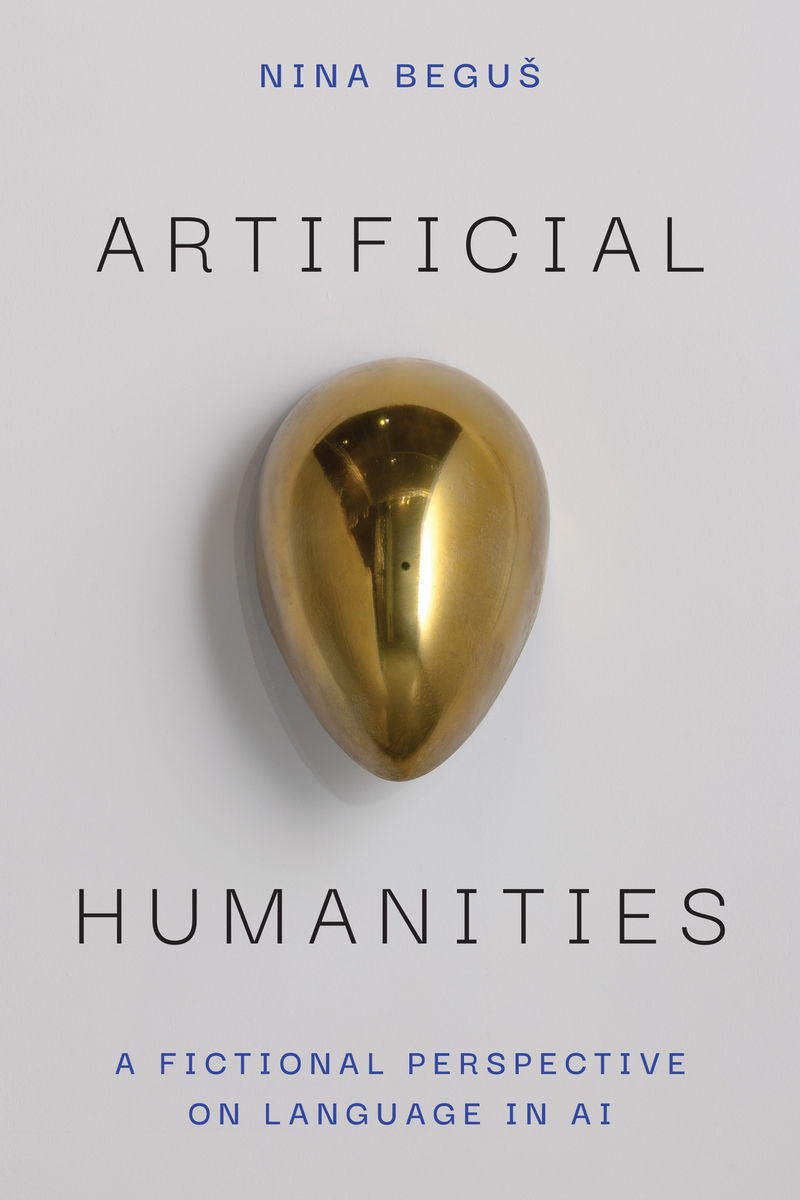
by Nina Beguš
University of Michigan Press, 2025
Cloth: 978-0-472-07773-1
Paper: 978-0-472-05773-3
eISBN: 978-0-472-90532-4 (OA)
Highlighting the impact of human-like AI design, from gendered virtual assistants to romanticized social robots, the book shows how these technologies intersect with longstanding humanistic questions about the concepts of creativity and language as well as the relations between humans and machines. Additionally, the book explores AI’s applications in medical fields, particularly psychiatry and neurotechnology, including how AI interacts with the human body and mind to address conditions like paralysis. By emphasizing the philosophical and cultural implications of these technologies, Beguš highlights the need for responsible innovation that prioritizes human well-being as well as machine potential outside of human imitation. Accessible and thought-provoking, Artificial Humanities offers tools for analyzing and assessing technologies while they are being developed and invites readers to see how the humanities can guide us toward a more thoughtful future for AI.
2025 Artificiality Book Award Winner
— Artificiality Institute“Beguš shows the possibilities in a deep archive of cultural representations of artificial intelligence. . . This is the major contribution of Artificial Humanities. The book joins many critiques of anthropomorphization in disputing “the idea of a machinic intelligence as a humanlike intelligence” (210). It stands out in strongly arguing that fictional narratives provide us with warnings about the inevitable disappointments and disasters when we conflate the two.”
— James E. Dobson, Critical AIThe book reads as an adventure. It is impressive and so enlightening. It comes as a compass to follow how the creations of artificial beings, in works of fiction, myths and technological productions, have endlessly haunted one another.
— Pierre Huyghe, Artist of Idiom“Reading this book provides the same pleasure one feels when a complicated proof suddenly resolves into a clean idea. The humanities are not late to AI; they have been there all along, hiding in the metaphors. Artificial Humanities gives them a proper role, not as ornamental critics but as collaborators in building systems that expand rather than shrink our imagination.”
— The One Percent Rule“Artificial Humanities offers something rare: a mythology-first approach that treats cultural narratives as infrastructural determinants of technical design.”
— Ling Zi, Configurations“Scholars in the humanities who wrestle with how to meaningfully engage with AI will find this study invigorating and hopeful. . . Recommended.”
— S. Casey, Choice“The book stands out as a timely and foundational work. . . It positions “Artificial Humanities” as a potentially central discipline that will require ongoing negotiation and conceptualization by scholars in the literature, culture, and media, as well as by AI researchers and designers, in dialog with the rapidly expanding field of critical AI studies. Beguš compellingly shows why understanding AI today and shaping its future require precisely the kinds of knowledge the humanities have to offer.”
— Nana Ariel, AI & SocietyLicense: CC BY-NC

 Loading...